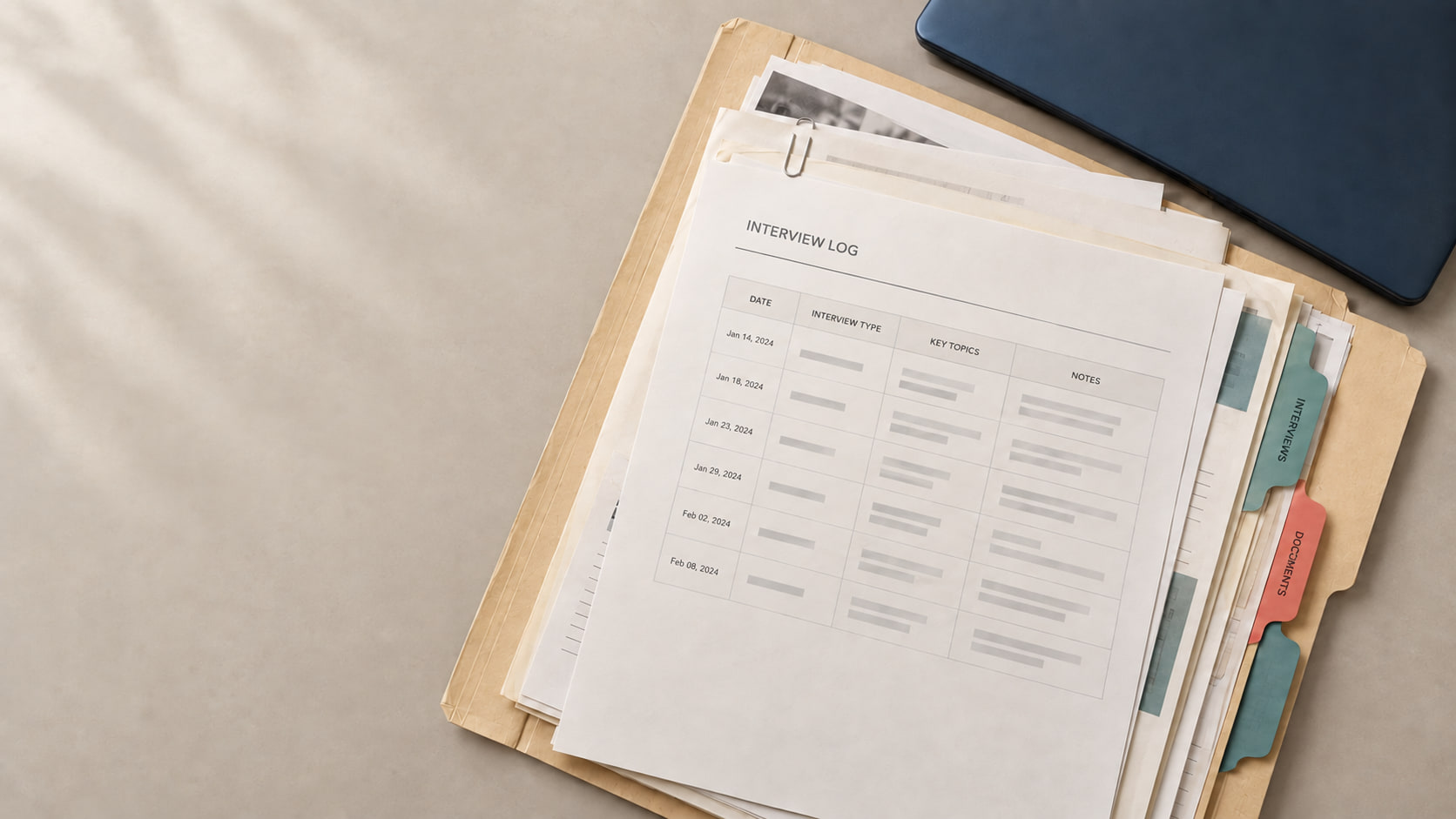
Imagine receiving a lawyer’s letter about a workplace complaint your team investigated several years ago. You look for the interview notes, findings, and follow-up. The file is gone because the retention policy allowed it to be deleted.
A recordkeeping minimum does not tell you everything you need to know about retaining an investigation file. Your schedule also needs to account for applicable laws, potential claims, and preservation obligations.
My recommendation: build a complete, dated record while the investigation is happening, and establish a retention process before anyone needs to retrieve it. If you need help, start with empathiHR. We can help you organize the process and identify questions that require legal advice. Do not make the shortest recordkeeping requirement your automatic deletion date.
This article covers a federal recordkeeping baseline and uses Texas sexual harassment deadlines as an example. The requirements that apply to your organization may differ.
Why One Year Is Not a Complete Retention Policy
Under 29 CFR 1602.14, covered employers generally must preserve personnel or employment records for one year from the record’s creation or the personnel action involved, whichever is later. For an involuntarily terminated employee, the rule requires retaining that person’s personnel records for one year from termination.
The same regulation requires preserving records relevant to a filed discrimination charge until final disposition. That can include records concerning other employees in similar positions.
Those are requirements to understand, but they are not a complete investigation retention schedule. Other laws and record categories can require longer periods. The EEOC’s recordkeeping summary, for example, identifies three-year payroll requirements under the ADEA and Equal Pay Act, along with certain two-year wage-differential record requirements.
The practical question is broader: will you still have the records needed to explain what happened, what you learned, and how you responded?
Seven Things to Include in a Workplace Investigation File
These seven categories are a practical framework, not a universal statutory checklist. The contents should reflect the allegations, evidence, and decisions in the particular matter.
- The intake record. Record what was reported, who received it, and when. Identify the reporting person if known, and distinguish their words from your summary. Document anonymous reports without guessing who made them.
- The investigation scope. Identify the allegations, relevant time period, investigator, and initial questions to resolve. Set the scope early and document material changes as new information emerges.
- The interview record. Record who participated, when the interview occurred, the questions asked, and the responses. Distinguish direct quotations from paraphrases. Document accounts promptly while memories are fresh.
- The evidence record. Preserve relevant emails, messages, schedules, photographs, time records, policies, and other materials. Note where evidence came from, when it was collected, and what requested information was unavailable. Include evidence that supports or contradicts an allegation.
- The findings. Address each allegation, identify the standard used, and explain how the evidence supports the conclusion. Document material inconsistencies and the reasons for credibility assessments. Be clear about what you could and could not determine.
- The response and corrective action. Record what was decided, who made the decision, when action occurred, and how the outcome was communicated. If no corrective action was taken, explain why.
- The follow-up. Record when you checked back, whether further misconduct or retaliation was reported, and what you did in response. A single check-in should not be treated as a guarantee that the problem is resolved.
Identify who created each record and when. If you later correct or supplement it, make that clear rather than silently replacing the original.
Good documentation supports fair decisions and helps protect employees. It also gives someone reviewing the matter later a clear account of your response.
How Long Should You Keep Investigation Records?
There is no single retention period that fits every workplace investigation.
Consider Texas sexual harassment claims. The state administrative complaint deadline is generally 300 days after the alleged harassment. A separate provision generally requires a civil action within two years after the administrative complaint was filed. Receipt of a state notice of the right to file a civil action can trigger an earlier 60-day deadline. These are distinct deadlines, not time periods to add indiscriminately. See Texas Labor Code §§ 21.202, 21.254, and 21.256.
The point is that relevant records may be needed well beyond the first anniversary of a complaint. Federal claims, other state laws, and different allegations can follow different rules.
Start with a written retention schedule. empathiHR can help you review the practical requirements, configure the documentation process, and identify where legal guidance is needed. The schedule should address:
- Which records belong in each investigation file.
- Which legal requirements and potential claims affect retention.
- What event starts the retention period.
- When a preservation hold overrides routine deletion.
- Who reviews the file before its eventual disposition.
Define what “closed” means in your process. An internal investigation can be complete while corrective action, follow-up, or an external proceeding remains open.
When Routine Deletion Must Stop
A preservation obligation can arise before a lawsuit or agency charge arrives. Relevant electronic information may need to be preserved when litigation is reasonably anticipated. Federal Rule of Civil Procedure 37(e) addresses the loss of electronically stored information that should have been preserved for anticipated or ongoing litigation.
If circumstances suggest a claim may be coming, contact empathiHR promptly for help identifying the records and systems that may be affected, and involve employment counsel to assess the preservation obligation. Do not wait for a formal filing if there is already reason to anticipate litigation.
A written hold procedure should identify the people and information involved, the deletion processes to suspend, and the person responsible for implementation. Relevant information may exist in email, chat, text messages, recordings, and systems outside the central investigation folder.
Keep the hold in place until counsel confirms that the applicable preservation obligations have ended. Closing your internal investigation does not automatically authorize deletion.
Keep the File Secure and Usable
An organized file is useful only if you can retrieve it and control access to it.
The Texas Workforce Commission recommends maintaining a separate grievance and investigation file and sharing investigation results on a need-to-know basis.
Use a secure location with restricted access. Maintain an index or consistent naming system so an authorized reviewer can follow the chronology.
Centralizing the file does not mean deleting original emails, texts, or earlier versions. Preserve source materials as required and make it clear where they are stored.
For empathiHR clients, we manage this documentation as part of the investigation process. The records described in this article, along with the materials collected during an investigation, are stored in empathiHR’s case management system with configured retention rules. They are kept securely and organized for retrieval when needed.
That means your team does not have to piece together the investigation file from inboxes, text threads, and individual managers’ folders months or years later. We manage the records so you can focus on responding to the concern and supporting your employees.
The central file also supports preservation efforts, but relevant information may still exist elsewhere in your organization. Any legal hold needs to account for those additional sources.
Avoid unsupported speculation about someone’s motives and unnecessary personal details about anyone involved. Record the information needed to understand the allegations and decisions.
If interviews are recorded, address applicable recording requirements and access controls before recording begins. Video-documented workplace investigations can preserve the questions and answers given during an interview, but they still require careful questioning, corroboration, and analysis.
How Documentation Supports a Harassment Defense
Investigation records can support several aspects of an employer’s response to a claim. One example is the Faragher/Ellerth affirmative defense, which applies to certain supervisor-harassment claims under federal law.
The defense requires an employer to establish that it exercised reasonable care to prevent and promptly correct harassment, and that the employee unreasonably failed to use available preventive or corrective opportunities or otherwise avoid harm.
It is unavailable when the supervisor’s harassment culminates in a tangible employment action, such as discharge or demotion. See the Supreme Court’s decision in Burlington Industries, Inc. v. Ellerth.
Policies, training records, reporting procedures, investigation records, and follow-up can help show what the employer actually did. But a published reporting channel does not, by itself, establish that an employee acted unreasonably.
Documentation supports the analysis. It cannot substitute for an effective process or make the defense available in every case.
Four Actions to Take This Week
- Review three closed matters. Compare each file with the seven categories above. Identify missing records and follow-up steps. Label any later reconstruction honestly; do not backdate it.
- Review your retention schedule. Check whether investigation files have an appropriate schedule and whether its starting point is clearly defined.
- Check storage and access. Confirm that relevant materials can be located, original evidence is preserved as required, and access is restricted.
- Review your hold procedure. Identify who contacts counsel, who implements preservation instructions, and how affected systems and employees are covered.
The goal is a record that shows what you knew, what you did, and whether your response addressed the concern. Build that record as the matter unfolds.
Industry shapes how a response works in practice. In food service, records help managers maintain continuity across shifts and locations and show how concerns were addressed. See restaurant harassment prevention and the five risk factors in one building.
Have questions about what to keep, how long to retain it, or where your investigation records should live? You do not have to work through those questions alone.
If you are an empathiHR client, contact us about your documentation and retention process. We manage investigation records in our case management system so they are organized, securely stored, and accessible when needed.
Not a client? You are welcome to reach out with questions or schedule a compliance assessment. Call 866.240.6618 to talk with empathiHR about your organization’s needs.
Frequently Asked Questions
How long should an employer keep workplace investigation records?
There is no universal retention period. A one-year federal personnel-record requirement may apply, but other laws and preservation obligations can require longer retention. empathiHR can help you establish a practical documentation and retention process and identify questions that need employment counsel’s advice.
What documents belong in a workplace investigation file?
A useful framework includes the intake record, investigation scope, interview records, evidence, findings, response or corrective action, and follow-up. Identify the author and date of each record and preserve source materials as required.
What must be preserved once an EEOC charge is filed?
Under 29 CFR 1602.14, covered employers must preserve personnel records relevant to the charge until final disposition. Relevant records can extend beyond the person who filed the charge. Preservation obligations may also arise before a charge is filed.
How does empathiHR manage investigation documentation for clients?
empathiHR stores investigation records and collected materials in its case management system with configured retention rules. We manage the documentation so clients have an organized, secure record that can be retrieved when needed, reducing the work of maintaining files and tracking down scattered materials.
Does documentation establish the Faragher/Ellerth defense?
Documentation can help prove the relevant facts, but it does not establish the defense automatically. The defense has specific requirements and applies only in certain circumstances involving supervisor harassment.
Get the next one in your inbox
Plain-English analysis of EEOC enforcement, state training mandates, and workplace investigations. A few short emails a week. Unsubscribe anytime.